
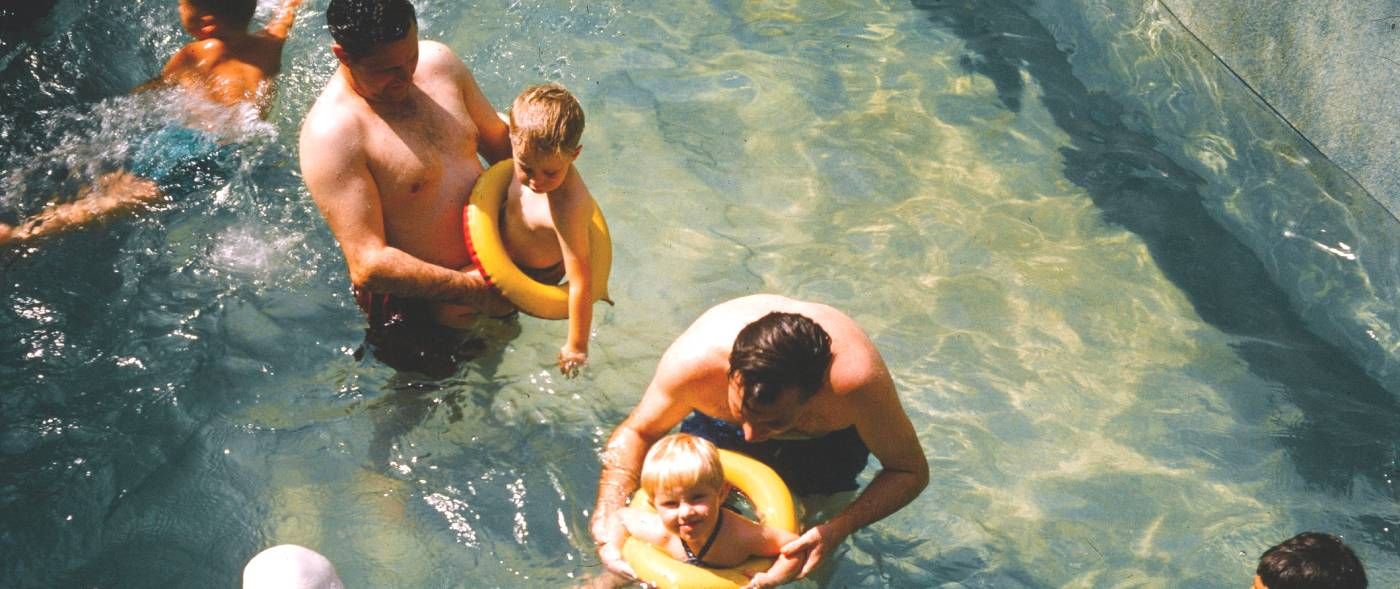
For many parents in North Arlington, signing up a child for swim lessons feels like checking off an essential safety milestone. It is natural to assume that once your young one knows how to kick, paddle, or stay afloat, the primary dangers surrounding water are under control.
The reality of water safety requires a much broader focus.
Living in North Arlington means water is a constant element of family life. Between weekends spent navigating the sprawling waters of River Legacy Park, summer trips to Six Flags Hurricane Harbor, and afternoon gatherings around neighborhood or backyard pools, aquatic environments are everywhere. Because water is an everyday reality in North Texas, teaching a child to swim is only the first step. When an unexpected crisis occurs in the water, an adult is almost always the immediate first responder. A parent’s personal comfort level, physical stamina, and genuine water competency can decisively change the outcome of a critical situation.
Water safety is not just a milestone for children. It is a protective skill for the entire family.
The Disconnect in Adult Aquatic Skills
Many adults consider themselves fully capable swimmers simply because they can relax on a pool float or comfortably cover a short distance in calm water. However, local data consistently reveals a significant gap between casual swimming comfort and real emergency preparedness.
According to national research from the American Red Cross, nearly 80% of adults across the country claim they can swim. Despite this high confidence, only 56% can actually execute the five baseline water competency skills required to survive an unexpected aquatic crisis:
Entering water that is over your head and returning safely to the surface.
Floating or treading water continuously for at least one minute.
Turning completely around in a circle to locate a safe exit point.
Swimming 25 yards without stopping to reach safety.
Exiting the water entirely without relying on steps or a ladder.
Consider this crucial question: If your child unexpectedly slipped into deep water or got caught in a sudden current, do you possess the physical endurance to swim out, secure them, and manage both of your weights to get back to safety? This is not about creating anxiety, it is about building practical capability.
Why North Texas Environments Require Adult Competence
The diverse landscape of North Arlington means that avoiding water is rarely an option for active families. Caregivers frequently find themselves supervising children in a variety of challenging aquatic settings, from residential backyards to major public recreational areas.
Tragic events in our local history illustrate how quickly an ordinary day can turn into a critical emergency, even when families are nearby. Last May, a three-year-old boy lost his life in an Arlington backyard pool after briefly wandering outside while his family was indoors. A similar accidental tragedy occurred when a four-year-old child woke up early from a nap and made his way into a home pool undetected. Even structured safety features can leave gaps. A historic incident involving four-year-old twin brothers on Hunter Cove Drive highlighted how quickly young children can find a way into an in-ground pool area, leaving distraught parents to perform CPR before paramedics arrive.
Our open water and public venues present unique challenges as well. Kayakers recently discovered an adult male face down in the water at River Legacy Park, highlighting the unpredictable nature of our natural bayous and rivers. Flash flooding can also completely transform familiar areas, such as the powerful storm waters near the UTA campus that once overwhelmed a doctoral student, Alan Amaya, sweeping him into a fast-moving creek behind the physical education building. Even trained water park employees are not immune, as seen when a teenage worker at Hurricane Harbor had to be rescued by a fellow employee after falling into a deep pool after hours.
When a water emergency unfolds, a parent who possesses true water competence is structurally equipped to:
Maintain emotional composure and avoid paralyzing panic.
Recognize the silent, subtle signs of a active drowning incident rather than waiting for loud splashing or shouting, which rarely happens.
Execute a safe, calculated rescue without becoming an additional victim in deep or moving water.
Maintain hyper-focused visual supervision without being lulled into a false sense of security.
The Power of Parental Role Modeling
Children are incredibly perceptive and continuously mirror the behaviors of the adults around them. If a caregiver displays visible apprehension near a pool, avoids getting into the water, or reacts with stress during a trip to the river, children routinely absorb those anxious cues. This secondary anxiety can directly slow down a child’s progress and confidence in their own youth lessons.
Conversely, when a child witnesses a parent navigating the water with calm, controlled skill, it establishes a healthy foundation. It builds respect for water boundaries while accelerating the child’s personal learning curve.
You do not need to be an elite competitive athlete to safeguard your household. You simply need to eliminate personal water anxiety, master fundamental survival strokes, and understand how to manage your own body in deep water. For parents whose children are already learning, advancing your own aquatic capability is a natural extension of your family safety strategy.
Critical Actions for a Water Crisis
When a water emergency occurs, immediate and deliberate action saves lives. Keep these core safety principles in mind:
Control Your Reaction: Children take their cues from your emotional state. Staying calm allows you to think clearly and act efficiently.
Alert Authorities Immediately: Delegate someone to call 911 right away while you focus on the immediate situation. Never delay the arrival of emergency medical personnel.
Reach or Throw, Don't Blindly Go: A large percentage of adult drowning fatalities occur when a protective caregiver jumps into a situation that exceeds their swimming endurance. Whenever possible, extend a long object like a pool skimmer, or throw a flotation device before placing yourself in direct danger.
Acquire CPR Skills: Because drowning is primarily an oxygen-deprivation event, immediate bystander CPR is a critical link in the chain of survival while waiting for Arlington fire and rescue teams to arrive.
Mandate a Medical Evaluation: If a child swallows water or experiences a near-drowning event, an immediate trip to a medical facility like Cook Children's Hospital is absolutely mandatory. Small amounts of water trapped in the lungs can cause delayed, life-threatening respiratory issues hours after leaving the pool.
Empowering Adults to Swim Safely
Many adults avoid taking swim lessons due to lingering embarrassment, the belief that they missed their window during childhood, or the assumption that formal training is only for kids. In reality, millions of adults across Texas reach parenthood without ever receiving formal swim instruction.
Adult swim programs are not about judgment or athletic perfection. They are purposefully designed to meet you exactly where your current skills stand. We focus on neutralizing deep-seated water anxiety, perfecting breath control, and teaching the exact mechanical survival skills required to confidently protect your family in North Texas.
Water confidence is a critical protective asset that belongs to the entire household.
Take the Next Step in Protecting Your Family
Enroll in Adult Swim Classes with Hudson Valley Swim North Arlington by visiting our official enrollment platform at the iClassPro Classes Portal or connect directly with our local team at (682) 456-1500. For more details regarding class structures and community water safety programs, visit our regional website at northarlingtontx.hvswim.com.